

Write Everything. Publish Carefully.
A publisher's guide to writing memoir in a more combative world (with case studies)

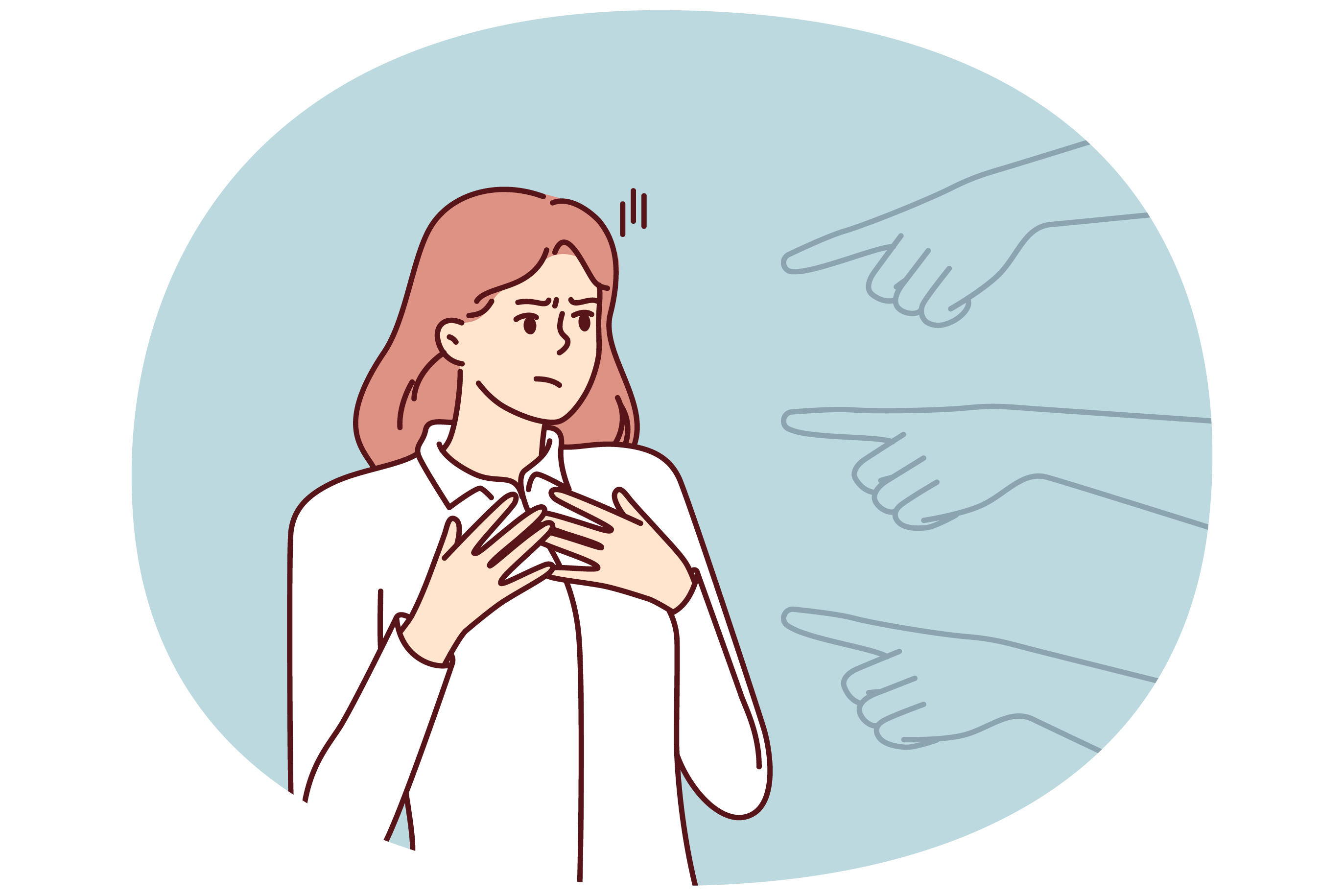
There’s something in the air. You probably feel it. A certain tension. A certain agitation. One might even say combativeness. These vibes are pulsing everywhere, and it’s not without consequence on the genre of memoir.
I’ve been in book publishing for 26 years. From 2000-2016, my experience with litigious third parties was limited to a total of three books. Two of those were trademark infringement, when Seal Press published a book called Adios, Barbie, and almost published a weight-loss memoir called Breaking Up with Layne Bryant. In both cases, we changed the books’ titles. The third was a claim of “false light.” The woman making the claim was the author’s former guru; luckily, the author had the good sense to send the woman her pages prior to publication, so we were able to remove any offending passages before the guru escalated.
Since 2016, the number of demand letters we’ve received at She Writes Press has gone up exponentially, and in the past two years alone, I’ve had six run-ins with third parties that have racked up more legal fees than we’ve had in the previous decade.
Questions arise: Is it that authors themselves feel more emboldened? Are they writing more exposing things about people in their books and being more careless about disguising identifying details? Or is it that the threatened parties feel more emboldened? That people are perhaps more likely than they were in years past to escalate and fight back?
I think it’s both.
Publishers try to get ahead of legal exposure. We aren’t sitting ducks. But, memoir is fraught, and full of stories of people doing bad things. Publishers can’t always foresee authors’ bad behavior, either, when it comes to scandals such as the one resulting in a lawsuit against the author of The Tell (and no, this story is far from dead or over).
For years I’ve told authors not to worry too much about lawsuits because authors tend to be over-anxious about their risk of exposure. The biggest issue is defamation, and it’s notoriously difficult to beat in court. Truth is an “absolute defense,” which gives authors a lot of protection to write their stories. If a memoirist recounts a personal experience of abuse, the onus is on the abuser to prove falsity. This protection is obviously incredibly important since the alternative—requiring survivors to prove the truth of their own trauma—would effectively silence the people most in need of a voice. I think about Chanel Miller’s incredible memoir, Know My Name. Absent these kinds of protections, there’s no doubt that her abuser, Standford swimmer Brock Turner, would have used his money and privilege to block publication of that book.
Annie Lamott famously wrote, “You own everything that happened to you. Tell your stories. If people wanted you to write warmly about them, they should have behaved better.”
This is true.
And, in today’s contentious climate where perpetrators are winning, I feel compelled to advise memoirists to be more cautious, and to get their work legally vetted if they have any concerns about how they’re portraying another person. Change names and identifying details as a matter of course. Spend the money for a legal read. Mind how you characterize someone. You can describe abuse, for instance, without calling someone names.
Years ago, we received a cease and desist letter from an ex-husband of one of our authors because she called him “porn addict” in the pages of her memoir. There were countless worse behaviors portrayed in that book, but that was the one thing he could point to that was in fact potentially libelous. Resist name-calling or characterizing someone in blunt terms. Own your experience, feelings, and interpretations and you’ll be okay.
What follows are a handful of the aforementioned recent “run-ins” we’ve had recently, which showcase the variety of accusations, and explain how we’ve dealt (or are dealing) with them.
Case study: Defamation
I’ll start with the only book I can name: Dumb Girl, by Heidi Yewman. This is because Heidi has written publicly about her experience in a post about her book launch that reads:
Six days before the launch, my brother—whose sexual abuse I wrote about in the book—sent a cease-and-desist letter via his lawyer to my publisher, demanding that She Writes Press not publish the book. My publisher, along with a lawyer explained that the book will be published and that he had no legal grounds to stop it.
Our lawyers response was multi-point defense of our position and was enough for the brother and his lawyer to back down. Heidi had a successful launch and has told me that getting her story into the world has been a huge burden off her shoulders. Her truth has been set free, which is one of the most powerful outcomes of publicly releasing shame. One of the very important outcomes of survivor memoirs is to redistribute shame—away from the survivors and back to those who caused it.
Case study: Tenants-in-common
This is a tale of two sisters. One is my author who finished her book that largely centers the sisters’ father. The book is nuanced in its treatment of the father, but at issue are the letters and photos that my author (Sister 1) wished to reproduce in her book. The father is long dead, and the two sisters are “tenants-in-common” of their parents’ documents. Sister 2 doesn’t want these documents to be published. Sister 1 insists her book doesn’t hold the same power if the documents, especially the letters, have to be removed. We’re moving ahead here, but cautiously and with some agreements and understandings in place.
Case study. Privacy
This one’s sad because the demand letter we received resulted in the author canceling her book contract. The memoir focused on the foster system, specifically the author’s relationship with one family who are fostering minor children. At issue here is a foster mother who seemed to have first agreed that she was okay with the book being published, but who later changed her mind. Her demand letter cited “Public Disclosure of Private Facts” as the reason for us to halt publication.
Because minors were involved, this one felt intractable. The author disguised the family and the children—their names and identifying details and where they reside. Her intent was not to harm, of course, and the book would have been an important contribution, but at the end of the day, some of what would have been disclosed about these kids is their story to tell. It might have been different if they weren’t still minors. As it stands, this is the first book SWP has ever canceled for potential privacy violations.
Case study. Publicity violation
This one has been the wildest ride because it’s ongoing, with a person on a dogged mission to put us in our place, it seems. The aggrieved party is the director of the estate of a beloved teacher and author who passed away nearly twenty years ago. The director claims that one of our books is exploitative, using the deceased author’s name to leverage the book’s salability. The facts are this: Our author writes about meeting this beloved man in person and asserts that he was deeply inspiring to her (as he has been to many). Later, he appears in a dream sequence, encouraging our author to write her book. She does—and the result is the book we published.
The director is trying to insist that we remove every single link in which the deceased author’s name is mentioned, something we’re not willing to do because he’s part of her story. We disagree that it’s exploitative, and the book isn’t selling in any kind of meaningful numbers that would indicate we’re piggy-backing off of the name recognition of this dear author. Even if the book was a bestseller, however, it would be hard to prove that the reason was because she met and wrote about one of her literary heroes in her book, or that said meeting is something reviewers include in their write-ups about the book.
Memoirists are allowed to write about interactions they have with people. A similar example is a book we have on our list, Anne Abel’s High Hopes, a story that credits Bruce Springsteen for lifting the author out of a depression. In another situation, we took the more cautious road, but mainly out of a difference of opinion. An author approached us to publish her memoir, Finding Truth with Michael, about her friendship with Michael Jackson. During the production process, we pushed back on too many things the author wasn’t willing to compromise on. We didn’t want Michael’s likeness on the cover. We wanted her to change her epilogue. We mutually agreed we weren’t the best publisher for her and she self-published, to her credit by the way! I appreciate an author who knows what she wants.
As for what we’re doing about the director’s insistence that we act to take down publicity and other listings, we’re not doing it. Our lawyer has let us know she has no ground to stand on here, so it is right and good to seek legal advice and to push back when someone is coming after you for reasons that are more personal than legal.
***
I don’t mean to scare writers with this post. I recommend that you let it all hang out while you write. Write everything. Write your absolute truth. And then when you’re done with your danger draft, as author Joshua Mohr calls it, comb back through with the following considerations in mind:
• Change names and identifying details of anyone who’s portrayed in a negative light.
• Ask yourself whether a portrayal is opinion or fact. Opinions are protected whereas statements like “He was a porn addict” is where legal exposure lives. Write about how your narcissist ex treated you (he or she was manipulative) rather than calling them a sociopath or psychopath.
• Consider what you’re claiming to remember versus what you know. Language like “I believed,” “I felt,” or “my experience was,” is more subjective, and offers more meaningful protection.
• If someone is deceased, that changes your exposure significantly. You cannot defame the dead, though living family members can potentially bring related claims in narrow circumstances.
• Trust your instincts. If you hesitated before writing a particular passage, flag it to come back to later. Come up with some measures for what you’re willing to cut and what must remain.
• Once you feel ready to publish, get a legal read if you’re still worried. Most of the authors I work with who get legal reads are advised to change details about their manuscripts that do not affect or alter the core story in any meaningful way—and these evaluations provide major peace of mind.
***
There’s a lot of time to get this right after you’re done with a more complete draft of your work. Getting ahead of all of this pre-publication rather than post is a gift you can give yourself and your publisher. Hang in there, Memoirists. Eyes wide open, as always, and take heart in the power of Truth.
This is so interesting. Thank you for guiding us through these possible minefields. One of the parts I appreciated most about Belle Burden’s “Strangers” is how she disclosed parts (but not all) of her prenup legal battle and then dealt with her ex around the “Modern Love” essay that was the precursor to her memoir—and also wrote about the legal exposure. Both her story & Suleika Jaouad’s “Between Two Kingdoms” detail painful breakups with personal revelations about the ex, and changing their names and identifying details didn’t really conceal them post-publication because it’s so easy with google to find out who the ex’s really were. How might authors take extra precautions if the characters they reveal are accessible to the public, and no amount of changing names or other identifying details will hide that it’s them?
Hi Brooke, Thank you, once more, for your very helpful advice. I did secure a legal read for my memoir to identify any potential legal issues before submitting the manuscript to She Writes Press. It was well worth the money spent, as it increased my peace of mind.