

What Actually Sells Books
The Magic AI Can't Touch


I spent a few days this past week at the annual Independent Book Publishers Association’s Pub U conference, where I always learn something new about books or writing or publishing—or all three.
Publishers attend this conference to be better at what we do, and we get to learn from our peers (publishers, and also authors since authors are often also publishers) about what’s working for them.
At Pub U, all the sessions I attended (or in one case moderated) were about sales and marketing. The effect of 4 million books having been published in 2025 (a 32.5% increase over 2024) is dilution. All publishers are selling fewer books, and therefore all publishers are looking for solutions to sell more. If you’re guessing that a lot of publishers think AI holds the answers, you’re right. They do.
That said, my takeaway about AI post-conference is that it can do a lot of things for us—it can help us do our systems better and faster and more efficiently; it can help with discoverability through better keywords and back-linking/internal linking and SEO optimization, driving readers to find our books—but it’s no home run hitter. It might be able to help publishers load a base or two, but we and our authors still have to be the ones who swing the bat.
Every publisher longs for a breakout book, but that’s not the only thing that drives publishers to publish. For instance, She Writes Press is not focused singularly (or even particularly) on trying to make bestsellers. Our mission is to give voice to women writers. Some books perform better than others, and not always for reasons we can know or predict. I’ve always felt this is the magic of book publishing, actually, because what fun would it be if we could predict our winners? There’d be no effort to level the playing field, and the Big Five would have a lock on the market. As it stands, indies are in play because there are nuances to this business, and no single publisher has a monopoly on taste or what readers are looking for.
While I was at the conference, one of my authors sent me an email asking for my opinion about another book, written by a friend of hers, which the author perceives to be similar, but also which the author perceives to be breaking through in ways her book did not.
These are hard emails to respond to because authors don’t always understand how difficult it is to sell books, and many authors believe that getting their book written and published is the hardest and heaviest lift. Of course, it’s not. The hardest and heaviest lift is the sales and marketing, which is driven by many factors.
In the case of the author in question, her friend’s book is a new release, Divine Corners, a memoir positioned as a holocaust survival story. It has two five-star reviews to date, and it’s #1 in Jewish Holocaust History as of the writing of this post. (Congratulations to Michelle!)
The SWP author, Enid, published her book, All Shook Up, in 2024. The book is a true story but she chose to write it as a novel. It’s categorized in YA. While the holocaust theme is there, front and center for the young protagonist whose parents’ survival and subsequent trauma shape her young life, we (by design) tried to sell this story as a book about teen culture of the 1950s with a young girl embarking on adventure and music who ultimately uncovers family secrets.
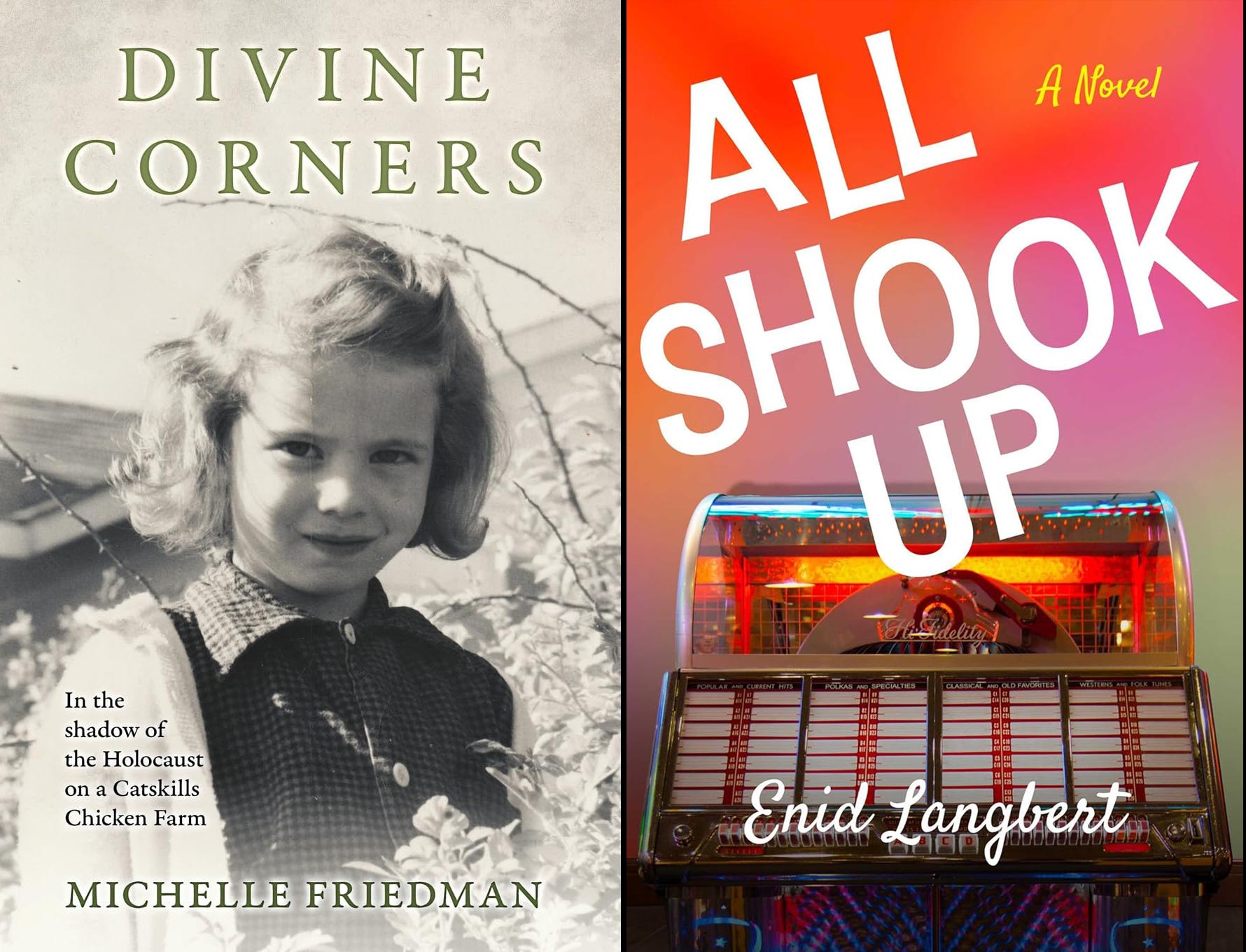
I share this because these two books, while they share at their core a story of two protagonists whose parents who survived the holocaust, could not be more different in the eyes of a reader. My author, Enid, sees the overlap in her shared history with Michelle, but a reader is likely gloss over this connection, especially at first glance.
I share this as a case study and because I put some significant time into considering Enid’s question. Was it a lost opportunity for us to have published Enid’s book as a novel, and a YA novel to boot? It’s hard to say, honestly, and it’s something we contend with every season with authors who want to fictionalize their stories. I will always advocate for memoir over autofiction since autofiction is fiction, and therefore must be sold as fiction—but there are plenty of books that prove that autofiction works. In other words, there are exceptions to every single opinion of what is best for a given book.
For Enid, she’s looking at the early success of another book and wondering if there could have been something we could have done differently or better as a publisher, or that she could have done differently or better as an author, and the answer is always going to be yes. Publishers make the choices they make when it comes to positioning: title, cover design, content. It’s a bit like Choose Your Own Adventure insofar as there are multiple ways to present the same book—and the publisher and the author make those choices, usually together, though sometimes one overrides the other’s advice, opinion, or desire.
Authors play a bigger role in sales and marketing than most of them realize, or want to. Publishers have (or should have) a role in getting the books out in the world, and many/most have sales and marketing strategies in place, but publishers aren’t always transparent with authors about what they can and can’t do. Part of the reason I left Seal Press (and traditional publishing at large) was because I felt we were not being honest with authors about what we could or were doing for them when it came to marketing and publicity. I wanted more transparent conversations so that authors would know how much fell to them. I wanted authors to be better educated about what it takes to sell books, and to realize that they should supplement our efforts with their own marketing and publicity campaigns.
It’s not the case—and it’s never been the case—that you publish the book and the readers will come. Instead, there are many factors at play that together are combined into some recipe that drives book sales and that make a book “work,” as we say in the industry. These include but are not limited to:
• The writing! Well, yeah. The writing matters, and countless well-written books never see the kinds of sales numbers they deserve. Someone once said to me that the best book ever written is one you’ve never read. All that means is that there are so many countless gorgeous books that don’t get elevated like they should—and the reason has nothing to do with the writing.
• A compelling, universal hook. Publishers work hard to help authors with this, but some books (often memoirs and novels) never quite get there either because there really isn’t a hook, or because the importance of this eludes the author.
• The author’s connections, platform, or name recognition. As much as I have long pushed back against the celebritization of book publishing, there’s rationale in big publishers seizing on authors who are known quantities, and for pushing authors who are not to be tireless in their efforts to elevate and amplify themselves, their brand, and their message.
• Timeliness and cultural relevance. This cuts both ways because national events can make or break books. Many books failed because of 9/11, or because of the pandemic, simply due to timing. October 7 resulted in the industry seeing certain Jewish-themed books as off-limits for a time. The social justice movement resulted in countless more books being published by authors of color. These things ebb and flow, and you can’t predict what world events are going to have an impact on how your book is received.
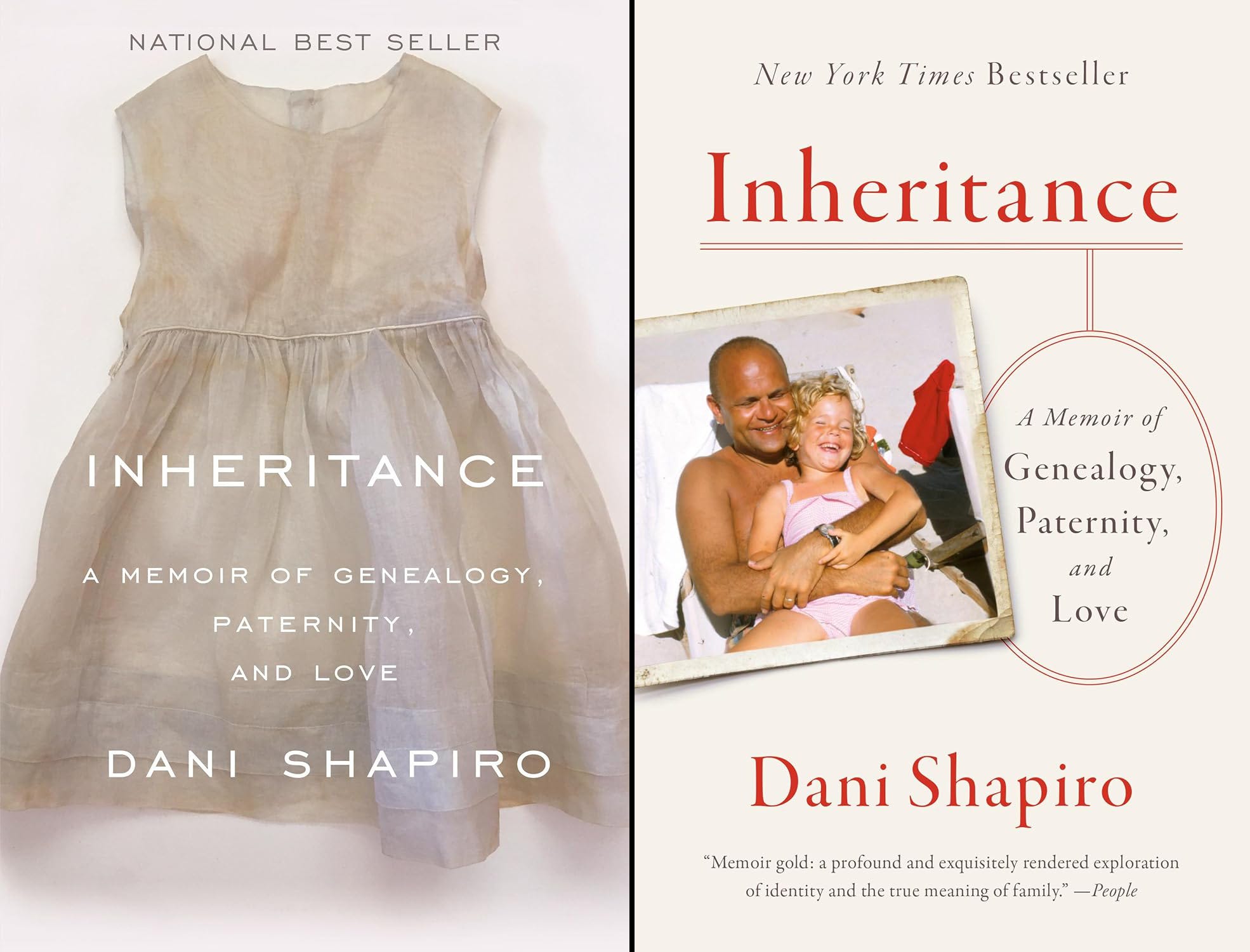
• Positioning. A publisher’s job is to support the author with a compelling title, cover, and overall package. That said, authors have a big say in this conversation, and sometimes they get in their own way. Sometimes publishers don’t get it right. You can see evidence of this from time to time with book covers, when the paperback cover attempts to rectify whatever information the hardcover sales conveyed. Case in point, Dani Shapiro’s Inheritance:
• Marketing/publicity. Helpful, of course, but even well-executed marketing and publicity campaigns don’t always sell books. In publishing we talk about “sticky” publicity, which generates real sales. At the conference this weekend I happened to be with the publisher of Mark Nepo’s The Book of Awakening, who shared with us that Mark’s Mel Robbins interview alone generated about 37,000 sales of this book. Incredible! This is on par with what Oprah used to be able to with a single show, and now what book clubs like hers and Jenna Bush’s and Reese Witherspoon’s can do over the course of several months for a debut. But most authors don’t get this kind of publicity, and not every podcast episode (not even Mel’s) generates this kind of sales result. And even great media can fall flat. I recall a book we had where the author was on “Good Morning America,” and we got a sales bump of about 200 copies from that appearance. Needless to say, disappointing. Publishers try to be ready to respond to media, but we don’t always know what will move the needle.
• Added post-publication from the comments: From Kathleen Schmidt, who penned “3 Things Every Author Must Do” following this post and who writes in the comments below: “I would also add that authors REALLY need to know their audience. So many do not. They must also know how to pitch their book. It doesn't mean pitch the book to the media. It means if I ask you what your book is about, you should be able to tell me in one very succinct sentence. Lastly, they need to understand audience development!” Read Kathleen’s post and subscribe to Publishing Confidential.
As I said, these are not the only things that sell books, but they’re some of the things that sell books. And it’s more recipe than formula. As an author, resist comparing yourself to another author. Easier said than done, I know. Publishers of course try to learn from the success of other books, which is why the industry is obsessed with comparative titles, but if we all knew how to replicate success, we’d all be rolling in bestsellers.
Importantly, AI might be able to support us to improve upon our recipes, but AI is more formulaic than creative. This is good news for publishers because what makes this industry so very special is that any author can get their work into the world, but we never know who’s going to reach what readers, or which books are going to make their mark or exactly for what reasons. This leaves room for creativity and new ideas, and for all of us to put energy, hope, effort, and expectation into every single book we publish. This is the fun part of publishing. If it ever becomes so formulaic as to be rote, we’ll lose the magic. Thankfully, the best books have never followed a formula—and no algorithm has figured out how to fall in love with a story. That’s still our job.
Oh, Brooke! This melted my heart : “ Thankfully, the best books have never followed a formula—and no algorithm has figured out how to fall in love with a story.” There’s something magical about books and having a professional say that just makes is more impactful 😊
Such an insightful and honest piece. thank you, Brooke.
One of the most important points here is that books don’t succeed from a formula alone. Positioning matters. Timing matters. Platform matters. Marketing. Authors understand they have to work at this. Being an author is a business. And it is a lot of work.
I especially appreciated the transparency around positioning and the reminder that authors play a major role in the life of a book long after publication day.
In today’s crowded market, visibility, discoverability, and sustained author energy are not optional.
And still… even with all the strategy in the world, there remains a kind of magic no algorithm can manufacture: a reader falling in love with a story and telling someone else about it. Word-of-Mouth still crushes it every time. That’s still the heartbeat of publishing.