

What the Anthropic Settlement Means for Authors
How to Get Your $3000

If you’re an author and you haven’t been following the Bartz v. Anthropic lawsuit, now’s the time to get up to speed. This is one of many lawsuits brought by authors against AI companies, but the first to be (nearly) settled. Anthropic has agreed to pay $1.5 billion to avoid worse or further damages, which is how we know that they know that what they did was incredibly wrong, and definitely illegal.
Anthropic is the company behind Claude. It’s privately owned as a public-benefit corporation, with heavy investment from Amazon ($4 billion) and Google ($2 billion).
This is a class-action suit, which means the three authors named in the suit, Andrea Bartz, Charles Graeber, and Kirk Wallace Johnson, are representing thousands of authors whose books were “allegedly” copied. I feel I must write allegedly here, but let’s be clear: the books were stolen and copied to train LLMs (large language models).
The Atlantic has been hot on the trail of this story for months, so its March 2025 “The Unbelievable Scale of AI’s Pirated-Books Problem” is a good place to get caught up.
The short version of this story is this:
AI companies engaged in copyright violation of the likes never before seen. They considered obtaining the books legally, meaning they’d have to pay permissions or rights fees to publishers and/or authors, but they quickly saw that would be too expensive and too slow. So, instead, they used LibGen, one of the most notorious piracy sites on the Internet, to illegally download hundreds of thousands of books to feed to their LLMs.
Upon being found out—and called out—the AI companies have claimed they’re stealing IP “for the greater good.” The general excuse is that what they’re doing benefits society, and that AI is too important to be bogged down by copyright law, which is rarely enforced anyway.
Nevertheless, many gutsy (and incensed) authors (and some companies like The New York Times; Getty Images; and a number of publishers, including Hachette, HarperCollins, Penguin Random House, and John Wiley & Sons) have filed suit against various AI companies.
The Anthropic case has gotten the most traction and attention, however, most likely because Anthropic is not Meta or OpenAI. It’s a smaller fish, which makes it an easier target. That said, the outcome of this case is meaningful, because it sets a precedent for what will be expected of Meta and OpenAI.
Let’s talk about the $1.5 billion dollars, which will amount to about $3000 per stolen title, and who gets it and how you get it.
First, you need to see if your book is on the list. The Atlantic provides an easy database to check to see which of your books were illegally downloaded (and used to train Claude).
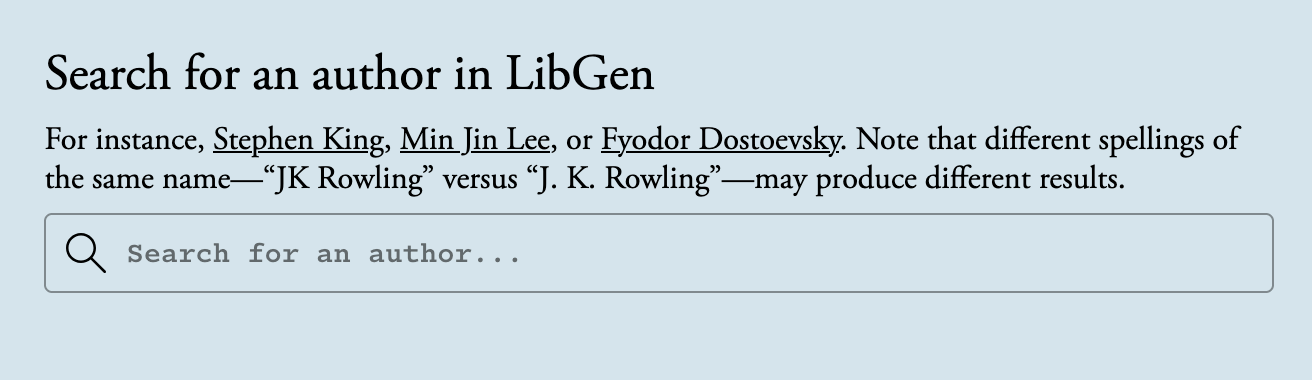
Next, since this is a copyright lawsuit, eligibility in this case all comes down to the copyright.
Two qualifications entitle authors to the money (information courtesy of The Authors Guild):
1. Your work was registered within three months of its first publication (in any format) OR before the titles were downloaded.
2. Your work was registered within five years of publication and before the download dates (from LibGen in June 2021 and PiLiMi in July 2022).
The first thing to do is to check the US Copyright Office to make sure your copyright got filed. Visit the site here and type in your name or your ISBN:
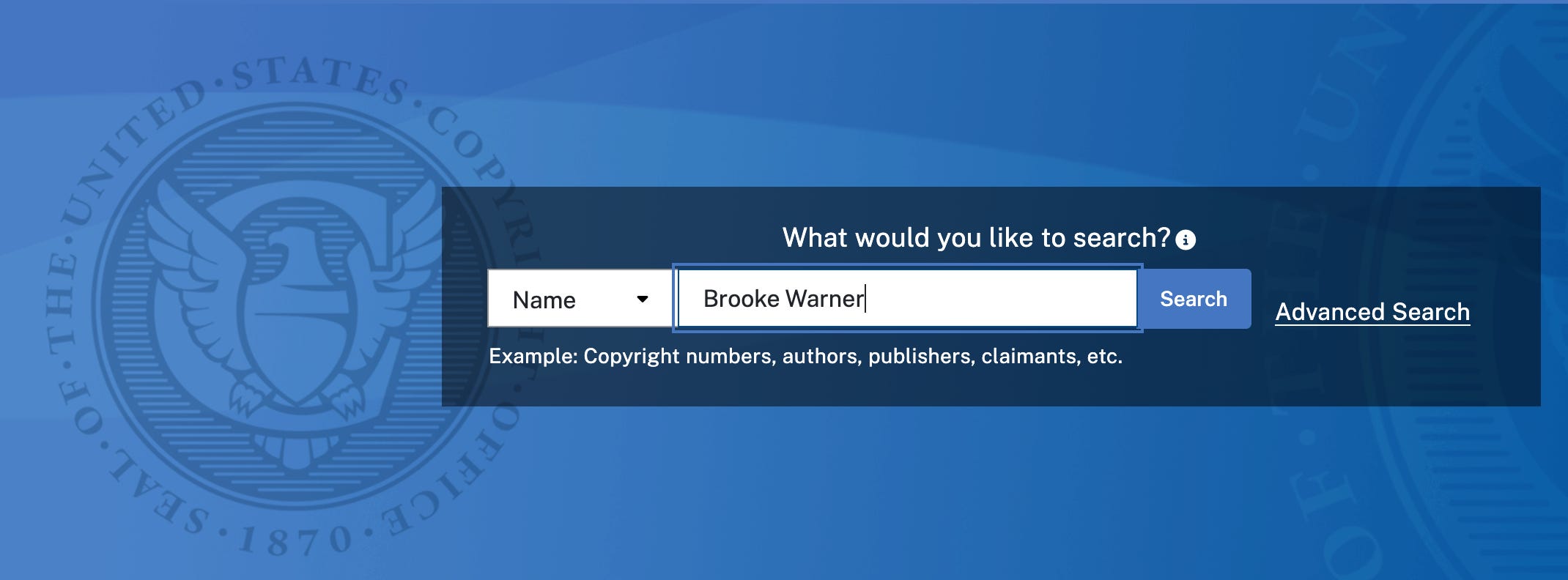
If your copyright was filed within the parameters laid out above, take yourself to https://www.anthropiccopyrightsettlement.com and fill out this form for each of your titles that qualify, regardless of how you published (self/hybrid/traditional). Please note that if your copyright was not properly filed (ie, it’s not registered with the Copyright Office, or not showing up), you do not qualify.
If you’re an author who published with a publisher, check your contract, but most book contracts specify that the publisher has the exclusive right to publish your book, meaning they are the publisher of record.
The Authors Guild specifies:
For books where the author has granted the publisher an exclusive right to publish the book, the publisher is the legal owner, and the author is the “beneficial” owner under copyright law. However, if the book has gone out of print and the rights have reverted to the author, the author becomes the sole and legal owner.
Your publisher should be sending out information about their intentions, and if you don’t hear from them soon, shoot them a note. (Note to my authors, one such note from me will be forthcoming this week, I promise. I have some questions for our lawyer about the languaging of our contracts, so answers are TBD!)
After the $1.5 billion settlement is granted, there will be some additional steps to take, or maybe we’ll get notified. That part is not totally clear. So stay up to date by checking The Authors Guild, which is by far the best and most up-to-date source. Also, if you’re an author, join The Authors Guild. They’re working hard for us every day.
In closing, there’s a fair amount of caveating in all of the news stories coming out about this case because there’s still another hearing on Monday (September 8) for comments or objections, at which point the court will determine whether to approve the settlement. So we’re not all the way there yet, though we’re close.
Presuming this goes through, it’s being touted as a landmark moment for writers and authors. This will be the largest amount ever settled in a copyright case. The authors who took up the case should be given huge props and gratitude. In the David v. Goliath fight we’re currently in, this shows that David has a voice, and a stake. It’s an author’s right (literally, legally) to be asked permission for their work to be used, reproduced, or otherwise exploited.
It’s important to note what these AI companies actually did, which is that they took what was not theirs without asking. We have words for this. We call it violation, plundering, rape. How they did it, too, shows so little care, so much disregard for what writers and authors do. We have another word for the appropriation and reuse of our words. We call it plagiarism. Not as big an offense as the first, but we know it’s lazy, inappropriate, shameful. We know it’s wrong.
Since AI arrived on the scene, plenty of people are outraged and dismayed by it, but collectively we’ve dismissed its inherent wrongness. We are all colluding with it, after all. Use it or get left behind, they tell us. But none of us asked for this thing to be built, and the people who built it didn’t ask the people whose words it was built on if it was okay to use their words. They just did it, and now AI is here and it’s changing everything. From where I sit, it’s already starting to crack book publishing, and we don’t know how to hold up the walls. Really, we can’t.
What we’re witnessing with AI is human hubris at its most monstrous. The settlement is something, yes, but it feels not dissimilar from the family of a collateral-damage victim getting a payout for their death. We cannot quantify or tally the toll AI is going to take on us. I already see the fallout every single day in the form of people passing off AI-written words as their own; in the disincentive kids feel to write their own essays or do homework unassisted; in people abdicating common sense to send along or publish information they’ve pulled from AI, whether or not it’s true, or even makes sense; in the glossy sameness of AI imagery; in the fact that the new skillset required of editors is how to make AI-enhanced manuscripts more human-sounding. Dystopia used to be a genre; now, it’s our reality.
But sure, we’ll take the $3000 per book. We’ll claw back some of what we’re due. Yes, we’ll take the wins where we can.
Wow I see all of my books on the list. I will search further and send to my agent. I was wondering about this! You are a gem for putting it all together for us.
I have had a long and productive career as a cookbook author and collaborator. My total list of published titles is over a hundred since 1988. When I heard of this suit, I took an entire day to research the pirates, and I discoverd 220 uploads of 72 titles. However, I "only" hold the rights to 139 of those uploads of 33 titles. There are multiple uploads because the pirates could scan books in different platforms, such as PDF, Kindle, Apple, and so on, plus size them acccordiing (so there could be a few different PDFs in various sizes, for example. And I wrote more than a few books as work-for-hire with celebrities and brands like WIlliams-Sonoma. As bad as the Anthropic situation is, I did have one positive experience. Last year, one of my publishers, HarperCollins, setted with Microsoft to use my books as AI training. I didn't want to take the blood money because I can already see how AI-generated content (include photos) is dominating social medai so quickly. However, my agency insisted, because, as shown, AI is going to steal the material anyway. That was a windfall of $5000 each for 9 titles, which I shared with HarperCollins and my agency. So actually there is a precedent already for $5000 a title, so $3000 is actually low. We'll see if the check ever comes in the mail.